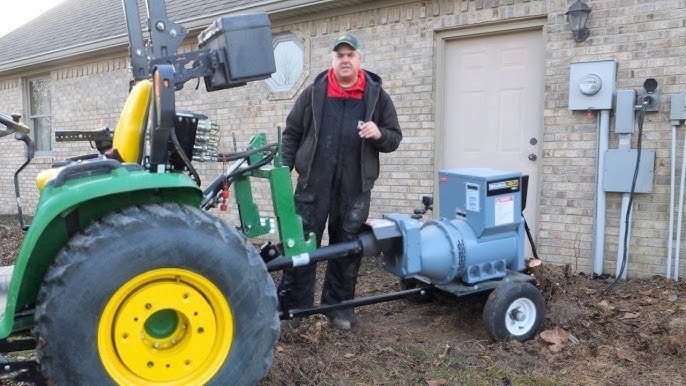
When the lights go out, or you need reliable power far from an outlet, a trusty generator becomes invaluable. For those with a tractor, selecting a PTO generator is often the smartest, most economical choice, leveraging equipment you already own to deliver crucial electricity. These tractor-powered workhorses have been a staple since the 1920s, evolving from early agricultural standards set by the American Society of Agricultural Engineers into the dependable units we rely on today.
A PTO generator isn't just another piece of farm equipment; it's a versatile solution for temporary power during outages and a mobile energy source for tools across your property. Think of your tractor as the engine, providing the raw mechanical energy, and the PTO generator as the alternator, converting that muscle into usable electricity. It's a simple, elegant partnership that keeps essential systems running and projects moving.
At a Glance: Your Quick Guide to PTO Generators
- What it is: A generator powered by your tractor's Power Take-Off (PTO) shaft.
- Main Uses: Emergency backup power (home, farm) and portable power for remote work.
- Key Advantage: Utilizes existing tractor engine, often more affordable and easier to maintain than standalone generators.
- Crucial Match: Generator horsepower requirements must match or be less than your tractor's PTO horsepower.
- Standard RPM: Most PTO generators are designed for 540 RPM input.
- Safety First: Always operate in dry conditions and follow manufacturer guidelines.
Why a PTO Generator? Understanding the Powerhouse Beneath Your Tractor
The appeal of a PTO generator lies in its inherent efficiency and utility. Instead of investing in a separate engine, fuel tank, and maintenance schedule for a dedicated generator, you harness the robust power plant already sitting in your barn or shed: your tractor.
This unique setup delivers several compelling benefits:
- Cost-Effective Power: Generally, PTO generators are less expensive upfront than similarly sized standalone, engine-driven generators because they don't include their own engine.
- Fuel Efficiency: They run off your tractor's fuel (diesel or gasoline), eliminating the need for a separate fuel source and simplifying logistics.
- Unmatched Portability: Since the generator attaches directly to your tractor, you can easily transport your power source anywhere your tractor can go – perfect for remote barns, fence lines, or construction sites.
- Space-Saving Design: Without its own engine, a PTO generator is typically more compact, taking up less storage space.
- Simple Maintenance: Lacking an engine means less to maintain. You're primarily focused on the generator head, reducing complexity and potentially extending lifespan.
- Reliability: Tractors are built for heavy-duty work, often providing a more durable and longer-lasting power source than many smaller portable generators.
Whether you're battling a widespread power outage, powering a remote well pump, or running electric tools far from an outlet, a PTO generator transforms your tractor into an indispensable mobile power station.
Your Tractor's Role: The Heart of the PTO System
Before you even start looking at generator models, it's critical to understand your tractor's capabilities. Your tractor isn't just pulling the generator; it's powering it. The PTO shaft delivers mechanical energy, measured in revolutions per minute (RPM) and horsepower (HP), which the generator then converts into electricity.
Most PTO generators are designed to operate at a standard 540 RPM at the PTO shaft. It's rare, but some larger generators might require 1000 RPM. Always verify your tractor's PTO speed and ensure it matches the generator's requirement.
The most critical factor, however, is horsepower. Every PTO generator has a minimum horsepower requirement. If your tractor's PTO horsepower falls short, the generator won't produce its full rated output and could even damage your tractor or the generator itself. For instance, a robust unit like the Winco W75PTOS-17kW, with its substantial 78,000 rated watts, demands a hefty 156 horsepower at the PTO. In contrast, a more modest Winco W15PTOS (15kw), offering 15,000 rated watts, only requires a 30 horsepower engine, making it suitable for smaller tractors. Always check your tractor's PTO HP rating and match it appropriately.
You'll also need to ensure the physical connection is compatible. The industry standard for input shaft size is 1-3/8″ with 6-splines. Verify this on both your tractor and the generator you're considering.
Decoding Generator Specs: What the Numbers Mean for You
Understanding the jargon of generator specifications is key to making an informed decision. Here's a breakdown of what those numbers on the spec sheet really mean:
Wattage: Continuous vs. Surge Power
This is perhaps the most important spec. You'll see two main wattage ratings:
- Rated (Continuous) Watts: This is the power the generator can reliably produce day-in, day-out. It's the maximum power your appliances and tools can continuously draw without overloading the generator.
- Surge (Starting) Watts: This is the brief burst of extra power a generator can provide for a few seconds to start motors (like those in refrigerators, well pumps, or air conditioners) that require a higher initial current.
When calculating your needs, always prioritize continuous wattage. Add up the running watts of all the items you want to power simultaneously. Then, identify the single item with the highest surge requirement and add that to your total continuous watts to get your estimated surge demand.
For example, the NorthStar PTO Generator offers 13,000 Surge Watts and 12,000 Rated Watts. This means it can handle continuous loads up to 12,000W, with a brief kick for starting larger motors up to 13,000W. A larger unit, like the Winco W75PTOS-17kW, provides an impressive 78,000 starting watts and 78,000 rated watts, indicating its capability for very substantial and sustained power demands.
Voltage and Phase: Tailoring to Your Electrical Needs
Most homes and small farms in the US operate on single-phase, 120/240V electricity. This means you need a generator that can provide both 120V for standard outlets and 240V for larger appliances like well pumps or electric ranges.
- 120V: Standard household outlets.
- 240V: Higher-power appliances, often requiring dedicated circuits.
- Three-Phase: Some industrial or very large agricultural applications might require three-phase power, which is less common for typical backup needs. The Winco W75PTOS-17kW offers three generator phases, making it versatile for diverse applications.
Look for a generator with an Automatic Voltage Regulator (AVR). An AVR helps maintain stable voltage output, which is crucial for protecting sensitive electronics from power fluctuations. Units described as "professional-grade, suitable for fragile appliances" often have superior voltage regulation, like the now-discontinued Winco W120PTOS-18 (18kw) was known for, which featured in-tractor voltmeter management.
Hertz (Frequency): The Beat of Your Power
In North America, the standard electrical frequency is 60 Hertz (Hz). All generators you consider should output 60 Hz to ensure your appliances operate correctly. Incorrect frequency can damage motors and electronics.
Amperage: The Flow of Current
Amperage (Amps) represents the volume of electrical current available. Circuit breakers are rated in amps and are crucial safety features. They trip to prevent damage from overloads. For example, the Winco W75PTOS-17kW includes 250 amp circuit breakers, while the NorthStar PTO Generator features a 100 Amp thermal magnetic breaker, indicating their capacity to handle significant current draws safely. The IMD 16002P (16Kw) provides 60 rated amps through its two outlets.
Generator RPM: The Internal Speed
While your tractor's PTO operates at 540 RPM, the internal generator head often spins at a higher RPM (e.g., 1800 RPM for the Winco W75PTOS-17kW) to produce the desired electrical frequency efficiently. This is an internal design spec you generally don't need to worry about beyond ensuring the PTO input matches.
Choosing Your Workhorse: Key Considerations for Selecting a PTO Generator
Now that you understand the specs, let's walk through the decision-making process. Think of this as your personalized buying guide, ensuring you pick a PTO generator that truly fits your unique setup and requirements.
1. Matching Power Output to Your Needs
Start by making a list of everything you absolutely need to power during an outage or regularly use remotely.
- Essential Home Backup: Lights, refrigerator, freezer, well pump, furnace fan, medical equipment, phone chargers.
- Farm Operations: Milking machines, ventilation fans, feed augers, shop tools.
- Remote Work: Power tools (saws, drills), welders.
Calculate the continuous wattage for everything you plan to run simultaneously. Don't forget to account for the highest surge wattage for motor-driven items. Always err on the side of slightly more power than you think you'll need; it’s better to have too much than too little.
2. Tractor-Generator Compatibility is Non-Negotiable
We covered this earlier, but it bears repeating:
- PTO Horsepower: The generator's required HP must be less than or equal to your tractor's PTO HP.
- PTO RPM: Most generators expect 540 RPM.
- Input Shaft Size: Standard is 1-3/8″, 6-spline. The IMDLLC 10011P (10 kW), for instance, explicitly states it uses a standard 1-3/8″ 6-spline input shaft at 540 RPM.
Ignoring these crucial compatibility points can lead to expensive repairs or a generator that simply won't perform.
3. Electrical Configuration & Stability
Beyond the standard 120/240V, consider these:
- Automatic Voltage Regulator (AVR): Essential for protecting sensitive electronics (computers, TVs, charging medical devices). A good AVR ensures clean, stable power.
- Outlet Variety: Does the generator have the specific outlets you need? For instance, the NorthStar PTO Generator comes with multiple outlets, including four 120V 20 Amp outlets and even a welding receptacle, offering significant versatility.
- Three-Phase Power: If your specific farm or industrial equipment requires it, confirm the generator offers three-phase output.
4. Built to Last: Durability and Construction
A PTO generator is an investment, often used in demanding outdoor environments. Look for features that promise longevity:
- Heavy-Duty Materials: Steel, aluminum, and copper are excellent choices. The IMD 16002P (16Kw), for example, is constructed from steel, aluminum, and copper, emphasizing its heavy-duty design.
- Copper Windings: 100% copper windings are a gold standard for efficiency and durability in alternators, as seen in the NorthStar PTO Generator and the IMDLLC 10011P (10 kW).
- Brushless Alternator: Brushless designs generally require less maintenance and have a longer lifespan, a feature found in models like the Winco W75PTOS-17kW and IMD 16002P.
- Sealed Bearings: Maintenance-free, pre-sealed bearings, like those in the IMDLLC 10011P (10 kW), reduce upkeep.
- Weather Resistance: The generator should be able to withstand the elements, though you should still provide shelter during operation.
5. Prioritizing Safety Features
Safety is paramount when working with high-voltage electricity and rotating machinery.
- Circuit Breakers: Magnetic circuit breakers are vital for overload protection, automatically cutting power if the load exceeds safe limits. Units often feature mainline circuit breakers for overall system protection.
- Shielding: Ensure all moving parts, especially the PTO shaft, are properly shielded to prevent accidental contact. The NorthStar PTO Generator includes a plastic shield for safety.
- Voltage and Amperage Monitoring: A built-in voltmeter, and ideally an ammeter and hertz meter, allow you to monitor output and ensure stable operation. The IMDLLC 10011P (10 kW) includes a three-bar LED meter for Hertz, Volts, and Amps, providing clear operational feedback.
6. Ease of Service, Support, and Warranty
When something goes wrong, you want quick and reliable help.
- Local Support: Manufacturers with strong local dealer networks or support staff can be a lifesaver.
- Parts Availability: Can you easily get replacement parts?
- Warranty: Understand the warranty terms and what they cover. Products assembled in the USA, like the IMDLLC 10011P (10 kW), often highlight local support availability.
7. Essential Accessories and Connections
Don't forget the peripherals!
- PTO Shaft: You'll need a suitable PTO shaft to connect the generator to your tractor. Ensure it's the correct length and rating for the generator's horsepower demands.
- Quick-Connect Adapters: These can make attaching and detaching the generator much faster and easier.
- Grounding Rods: Essential for safe operation.
8. Maintenance for Longevity
While PTO generators require less maintenance than engine-driven ones, they aren't maintenance-free.
- Gear Oil: Some models may have a gearbox that requires periodic oil checks and changes.
- Bearings: Even sealed bearings should be inspected periodically.
- Cleanliness: Keep the generator head clean and free of debris to ensure proper cooling.
9. Tailoring to Your Use Case
Consider the specific tasks you'll tackle most often:
- Emergency Home Backup: You’ll likely need enough power for your well pump, refrigerator, furnace fan, and some lights.
- Portable Farm Power: If you're using heavy-duty power tools or a welder, prioritize models with high continuous wattage and robust outlets (like the welding receptacle on the NorthStar PTO Generator).
- Irrigation: While some generators can power pumps, dedicated PTO-driven pumps or pump-integrated generators might be more efficient for large-scale irrigation.
10. Beyond the Price Tag: Overall Value and Total Cost of Ownership
The cheapest option isn't always the best value. Consider:
- Reliability: How critical is this generator to your operations? Investing in a more reliable unit can save headaches and costly downtime.
- Lifespan: A well-built PTO generator, due to its simpler design, can have a very long operational life.
- Fuel Costs: You're using your tractor's fuel, so factor in your tractor's fuel consumption under load.
Practical Examples: What Different PTO Generators Offer
Let's look at a few examples to see how these considerations play out in real products:
- For Heavy-Duty Demands: The Winco W75PTOS-17kW is a serious contender for large homes, commercial applications, or substantial farm operations. With 78,000 starting and rated watts, a 250 amp circuit breaker, and a three-phase brushless alternator, it's built to power almost anything, provided you have a tractor that can supply its 156 HP requirement.
- Affordable and Capable: If you have a smaller tractor (around 30 HP) and need reliable power for essentials, the Winco W15PTOS (15kw) could be ideal. It offers 15,000 rated watts and 18,000 starting watts, complete with overload prevention, making it a robust solution without breaking the bank.
- Durable and Competitively Priced: The IMD 16002P (16Kw) presents a compelling option, combining competitive pricing with a durable build. Its construction from steel, aluminum, and copper, along with a heavy-duty, brushless alternator, ensures continuous output and a long service life, making it a solid workhorse for general farm and home use.
- Local Support and Comprehensive Monitoring: The IMDLLC 10011P (10 kW) PTO Generator Package offers a powerful combination of features for reliability and convenience. Assembled in the USA with local support, it provides simultaneous 120V and 240V output, 100% copper windings, and a handy three-bar LED meter for Hertz, Volts, and Amps, allowing you to easily monitor performance.
- Versatile with Multiple Outlets: The NorthStar PTO Generator (13,000 Surge Watts, 12,000 Rated Watts) stands out for its practical features. It includes multiple outlets, including a welding receptacle, making it highly versatile for both backup power and various on-site tasks. Its 100% copper windings and metal construction speak to its durability.
(Note: The Winco W120PTOS-18 (18kw) was a professional-grade model known for its suitability for fragile appliances and advanced features like in-tractor voltmeter management and a mainline circuit breaker for overload prevention, but it has since been discontinued.)
Staying Safe: Essential PTO Generator Operation Tips
Operating any generator requires diligence, and PTO generators are no exception. Safety should always be your top priority:
- Read the Manual: Always, always, always follow the manufacturer's instructions for both your tractor and the PTO generator. This is your primary source of safe operation guidance.
- Keep it Dry: Never operate your PTO generator in the rain or wet conditions. Electricity and water are a dangerous combination. Use a canopy, lean-to, or dedicated shelter to protect the unit from moisture.
- Stay Out of Water: Do not operate the generator if you are wet or standing in water. Ensure your footing is dry and stable.
- Proper Grounding: Always ensure your generator is properly grounded according to manufacturer instructions and local electrical codes.
- Ventilation: While the generator head itself doesn't produce exhaust like an engine, the tractor does. Ensure the tractor's exhaust is directed away from people and buildings to prevent carbon monoxide poisoning.
- Clear Operating Area: Keep the area around the generator clear of debris, flammable materials, and people, especially children and pets. The PTO shaft is a powerful, rotating component; keep clear of it during operation.
- Isolate Your Home: If using for home backup, ensure your home's main breaker is open (or use a transfer switch) before connecting the generator. This prevents dangerous backfeeding into the utility grid, which can injure or kill utility workers.
The Smart Investment: Maximizing Your PTO Generator's Lifespan
A PTO generator, with proper care, can provide decades of reliable service. Its simplicity compared to engine-driven units means fewer components to fail, but a few practices can ensure it lasts even longer:
- Regular Inspections: Before each use, quickly check for loose connections, damaged cables, or obstructions.
- Cleanliness: Keep the generator head clean. Dust, dirt, and debris can impede cooling and lead to overheating.
- Proper Storage: When not in use, store your PTO generator in a dry, clean place, ideally covered to protect it from dust, moisture, and pests.
- Lubrication: If your model has grease fittings or a gearbox requiring oil, adhere strictly to the manufacturer's lubrication schedule.
- Exercise It: Even if you don't need it for an outage, run your PTO generator under a moderate load (e.g., a few electric heaters or shop tools) for an hour or two every few months. This keeps components lubricated and ensures it's ready when you truly need it.
Your Next Step: Finding the Right PTO Generator
Selecting a PTO generator isn't a one-size-fits-all decision; it’s a personalized journey to find the perfect match for your tractor and your specific power demands. By carefully assessing your power needs, confirming tractor compatibility, and understanding the key specifications and safety features, you’ll be well-equipped to make an informed choice.
The right PTO generator empowers you to face power outages with confidence and tackle remote tasks with ease, transforming your existing tractor into a truly versatile powerhouse. Ready to dive deeper into the world of tractor-powered electricity? You can learn more about PTO generators and explore how this technology can safeguard your home and enhance your operations.