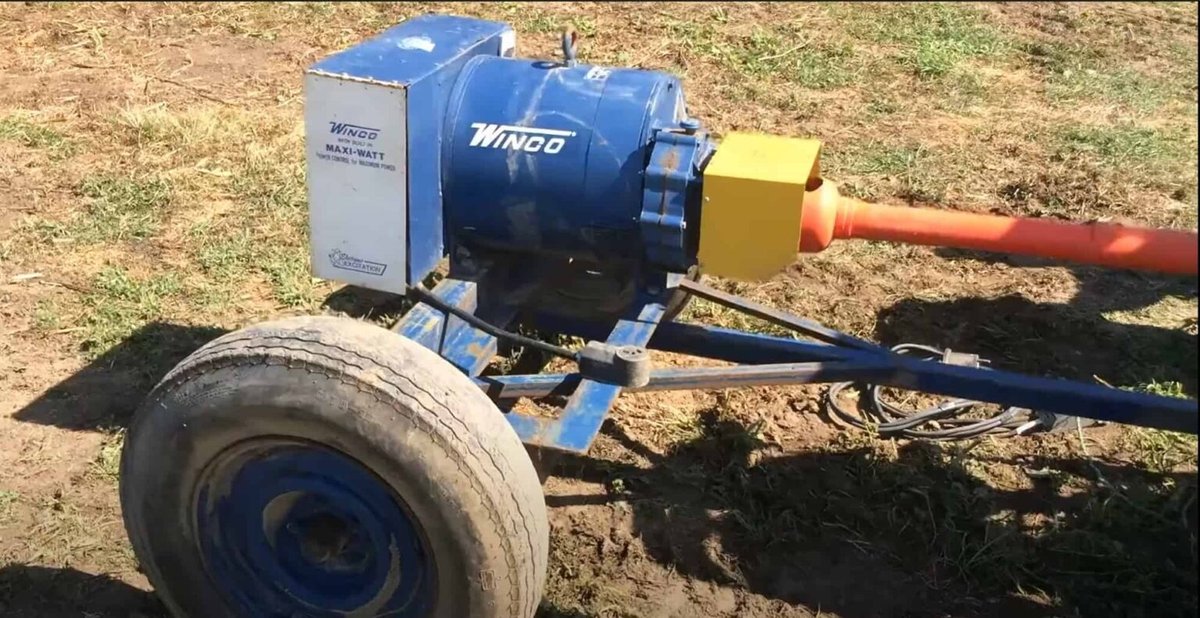
Imagine the hum of vital equipment, the glow of lights, or the steady churn of a pump, all running smoothly in a remote field, a power outage, or a challenging job site—without a standalone engine generator in sight. This isn't magic; it's the ingenious simplicity behind PTO Generator Fundamentals. These workhorses tap into the raw power your existing vehicles already produce, transforming mechanical energy into the electricity you need, precisely when and where you need it most.
For anyone who relies on power beyond the grid's reach – be it farmers, emergency responders, or mobile service providers – understanding how to harness this latent power source is not just smart; it's essential for resilience and efficiency. Let’s demystify these powerful, practical devices.
At a Glance: What You Need to Know About PTO Generators
- What they are: Generators that run off your vehicle's (tractor, truck, UTV) engine via its Power Take-Off (PTO) system, converting mechanical power into electricity.
- Key Advantage: Uses an engine you already own, saving significant costs and maintenance compared to dedicated engine generators.
- Ideal For: Off-grid operations, emergency backup, remote job sites, and mobile power needs.
- Core Benefits: Cost-effective, highly reliable, portable, durable, and more sustainable.
- Key Consideration: Requires a compatible vehicle PTO system and careful matching of horsepower (HP) to generator output (kW).
The Ingenious Simplicity: What Exactly is a PTO Generator?
At its heart, a PTO generator is a brilliant exercise in resourcefulness. Instead of housing its own dedicated engine, a PTO (Power Take-Off) generator acts as a sophisticated alternator, designed to connect directly to the PTO shaft of a compatible vehicle or piece of equipment. Think of your tractor, truck, or even a heavy-duty UTV: their engines are powerhouses, built for tough work. The PTO system allows that engine's rotational power to be redirected and utilized for external tasks.
When you hook up a PTO generator, you're essentially borrowing that engine's robust capabilities. The PTO shaft spins the generator's internal components, which then produce electricity. This makes them incredibly versatile, mobile power solutions, perfect for situations where traditional grid power is nonexistent, unreliable, or simply too far away. They range from smaller units capable of powering a few crucial tools to industrial-grade systems ready for heavy-duty applications. Some modern models even integrate advanced PMG (Permanent Magnet Generator) technology for even higher efficiency and more stable power output.
Why a PTO Generator Might Be Your Smartest Power Move
The decision to invest in a power solution isn't trivial. You want reliability, efficiency, and ultimately, peace of mind. PTO generators offer a compelling suite of advantages that often make them the superior choice for specific needs, particularly when compared to traditional engine-driven generators.
1. Exceptional Cost-Effectiveness: Leverage What You Own
This is perhaps the most immediate and impactful benefit. A standalone generator comes with its own engine, which adds significantly to its upfront purchase price, ongoing maintenance, and potential repair costs. A PTO generator, however, eliminates the need for that extra engine.
You're already maintaining your tractor, truck, or UTV. By utilizing its existing power plant, you effectively cut the purchase cost of your power solution by roughly half. No need to buy, maintain, or repair a second engine, dramatically reducing your total cost of ownership over the long term.
2. Unwavering Reliability and Durability
Because they lack their own engine, PTO generators inherently have fewer moving parts to wear out or fail. There are no carburetors to gum up, no spark plugs to replace, no dedicated fuel systems to maintain. The vehicle's engine, often designed for continuous, heavy-duty operation, provides the power. This translates to:
- Longer Operational Life: Fewer components mean less to break down.
- Robust Design: PTO generators are typically built to withstand demanding conditions, often more so than lighter-duty standalone units.
- Dependable Backup: When the grid goes down, your vehicle's engine—which you likely keep well-maintained anyway—is ready to power your generator.
3. Versatility and Unmatched Portability
Imagine needing power across a sprawling farm, at multiple construction points, or during a mobile emergency response. Dragging a heavy, self-contained generator around can be cumbersome. PTO generators, however, typically mount to a trailer hitch, a three-point hitch, or directly onto a vehicle's chassis.
- Easy Relocation: Simply drive your power source (your vehicle) to where the electricity is needed. No dedicated towing equipment or specialized power supply is required to move the generator itself.
- Adaptable Applications: From powering remote irrigation pumps to running welding equipment on a service truck, their adaptability is a major asset.
4. Sustainability & Fuel Efficiency: A Greener Footprint
In an era where sustainability is increasingly critical, PTO generators offer a distinct advantage.
- Reduced Reliance on Fuel-Specific Engines: Your vehicle's engine is typically more fuel-efficient under varying loads than a small, dedicated generator engine might be.
- No Extra Fuel Storage Hassles: One less tank to fill, one less type of fuel to monitor. This eliminates the need to store additional emergency fuel, which degrades over time (gasoline typically lasts about 3 months, diesel 6-12 months without treatment). This saves you the headache and expense of rotating fuel stock and treating it for longevity.
- Lower Carbon Footprint: By leveraging an existing, often well-maintained engine, you're reducing the overall energy consumption and emissions associated with operating multiple engines.
5. Leveraging Existing Equipment: Maximize Your Assets
For many users, particularly in agricultural, construction, or emergency services, vehicles like UTVs, ATVs, trucks, and tractors are already essential tools. A PTO generator simply adds another layer of utility to these invaluable assets. You're not buying an entirely new piece of machinery; you're expanding the capabilities of equipment you already own and use regularly. This smart utilization of resources is a hallmark of efficient operations.
Real-World Power: Where PTO Generators Shine Brightest
The true value of PTO generators emerges in their diverse applications. They aren't just for emergencies; they're daily drivers for productivity and critical support in numerous sectors.
Agriculture & Farm Operations: Powering the Lifeblood
Few environments demand reliable, mobile power more than a farm. PTO generators are indispensable for:
- Irrigation Systems: Powering pumps in remote fields where grid access is impractical.
- Grain Dryers: Providing crucial energy for processing harvests, especially during peak season.
- Farm Equipment: Running conveyors, augers, and other machinery far from the main barn.
- Remote Repairs: Supplying power for welding, cutting tools, and other repair tasks on equipment broken down in the far reaches of a property.
- Barn Backup: Ensuring essential systems like milking machines or ventilation continue during outages.
Construction Sites & Industrial Settings: The Unseen Force
On dynamic construction sites, power needs shift constantly. PTO generators offer:
- Tool Power: Running saws, drills, grinders, and other heavy-duty electric tools.
- Lighting: Illuminating work areas during early mornings or late evenings.
- Welders & Compressors: Powering specialized equipment crucial for fabrication and pneumatic tools.
- Remote Offices: Supplying power for temporary site offices, computers, and communication gear.
Emergency Services & Disaster Preparedness: A Lifeline When It Counts
When disaster strikes or a remote incident demands immediate attention, emergency services rely on dependable power. PTO generators are essential for:
- Firefighters: Powering pumps, lights, and rescue tools during rural operations or in urban areas where quick power hookup is inaccessible.
- Emergency Crews: Providing on-site power for communications equipment, medical devices, and temporary shelters during grid failures or natural disasters.
- Field Hospitals: Supplying critical electricity for medical tents and equipment in remote emergency zones.
Mobile Power: Trucks, Service Vehicles & Remote Workstations
For professionals on the go, a PTO generator transforms a standard vehicle into a mobile powerhouse.
- Utility & Service Trucks: Powering tools, hoists, and diagnostic equipment directly from the truck's engine.
- Remote Workstations: Providing electricity for computers, charging stations, and lighting in locations without infrastructure.
- Outdoor Events: Supplying temporary power for lighting, sound systems, and concessions.
Defense & Military: Power in the Field
In challenging operational environments, reliable power is non-negotiable. Military applications include:
- Field Operations: Providing on-demand power for command centers, communication arrays, and remote surveillance equipment.
- Logistics Support: Powering maintenance tools and temporary facilities in forward operating bases.
Beyond the Basics: Understanding Key Specifications & Requirements
Choosing and operating a PTO generator effectively means understanding a few fundamental specifications. This isn't just about reading a label; it's about matching the generator to your vehicle and your power needs to ensure optimal performance and safety.
1. The Vehicle PTO System: Your Foundation
The most crucial requirement is a compatible vehicle or piece of equipment with a functional Power Take-Off (PTO) system. Not all vehicles have them, and PTO systems vary in type and capacity.
- Tractor PTOs: Most common, typically found on the rear, operating at standard speeds like 540 or 1000 RPM (revolutions per minute).
- Truck PTOs: Often found on commercial trucks, integrated into the transmission, and can run at various speeds, often higher than tractors, like 1,500 to 1,800 RPM.
- UTV/ATV PTOs: Less common but available on some heavy-duty models, designed for smaller applications.
Always verify your vehicle's PTO type and output capabilities before considering a generator.
2. RPM Compatibility: Matching Rotational Speed
The generator needs to spin at a specific RPM to produce the correct frequency (Hz) of electricity (e.g., 60 Hz in North America). The PTO shaft provides the mechanical input, and the generator's gearbox typically steps up or down this speed to its optimal operating RPM.
- Tractor PTO Generators: Commonly designed for 540 or 1000 RPM output shafts. It's critical to match the generator's required input RPM with your tractor's PTO speed setting. Running a generator designed for 540 RPM on a 1000 RPM PTO (without proper gearing) will overspeed it and likely damage it, producing unstable power.
- Truck- or UTV-run Generators: Generators designed for these vehicles (like some Cummins Onan Protec PTO models) generally operate at higher PTO input speeds, typically 1,500 to 1,800 RPM. Always check the generator's specifications.
3. Horsepower (HP) Demands: The Engine's Capacity
Electricity doesn't come free; it requires mechanical energy. A good rule of thumb is that you need approximately 2 horsepower (HP) from your vehicle's engine to produce 1 kilowatt (kW) of electrical energy from the generator. This isn't a perfect 1:1 conversion due to efficiency losses, but it's a solid starting point for calculation.
- Example: If you need a generator that produces 20 kW of power, your vehicle's engine should ideally have at least 40 HP available at the PTO.
- Sizing Up: For larger generators producing, say, 12-40 kW of power, you'll need an engine with a substantial output, ranging from 24 HP to 80 HP or more.
- UTVs/ATVs: These can power smaller PTO generators (e.g., 3-5 kW) because their engines have lower HP ratings, suitable for lights or small tools.
- Truck Engines: Necessary for powering larger PTO generators due to their higher horsepower.
It is absolutely crucial to research the specific HP requirements for each PTO generator model you consider and ensure your vehicle can comfortably meet or exceed that demand. Overloading your vehicle's engine will lead to poor performance, excessive wear, and potential damage.
4. Generator Output: kW, kVA, and Voltage
- Kilowatts (kW): This is the measure of real power—the useful power available to run your equipment.
- Kilovolt-Amperes (kVA): This is the measure of apparent power. For resistive loads (like heaters or lights), kW and kVA are often similar. For inductive loads (like motors), kVA will be higher than kW. Most users should focus on kW for practical applications, but be aware of kVA ratings, especially for motor-heavy loads.
- Voltage: PTO generators come in various voltages (e.g., 120V, 240V, 208V, 480V) and phases (single-phase or three-phase). Match this directly to the voltage and phase requirements of the equipment you intend to power.
5. Advanced Technology: PMG for Enhanced Performance
Some PTO generators feature Permanent Magnet Generator (PMG) technology. This system uses strong permanent magnets instead of electromagnetic coils in the rotor, leading to:
- Higher Efficiency: Less energy is lost as heat.
- Improved Voltage Regulation: More stable power output, crucial for sensitive electronics.
- Reduced Maintenance: Fewer wear parts.
- Lighter Weight: Often results in a more compact and lighter generator.
If powering sensitive electronics is a priority, a PMG-equipped generator is often a worthwhile investment. For a deeper dive into the mechanics and applications of these systems, you might find more comprehensive information on PTO driven electric generators.
Sizing Your PTO Generator: A Practical Guide
Getting the right size generator is paramount. Too small, and you can't run your essential equipment. Too large, and you've overspent and might be putting unnecessary strain on your vehicle. Here's a quick process:
- List All Equipment: Make a comprehensive list of every item you want to power simultaneously.
- Determine Running Watts (kW) for Each: Check the nameplate or manual for the "running watts" or "continuous watts."
- Identify Starting Watts (Surge) for Motors: Motors (compressors, pumps, refrigerators) require significantly more power to start than to run. Find the "starting watts" or "surge watts" for these items.
- Calculate Total Running Watts: Add up all the running watts for everything you plan to use at once.
- Identify the Largest Starting Wattage: From your list, find the single item with the highest starting wattage.
- Add Largest Starting Watts to Total Running Watts:
Total Running Watts + Largest Starting Watts = Required Generator Wattage. - Consider Future Needs: Always add a buffer (10-20%) for future expansion or unforeseen needs.
Example:
- Well pump (running 1500W, starting 4000W)
- Lights (500W)
- Heater (1000W)
- Small tools (running 800W, starting 1500W)
- Total Running Watts: 1500 + 500 + 1000 + 800 = 3800W
- Largest Starting Wattage: Well pump at 4000W
- Required Generator Wattage: 3800W (running) + 4000W (well pump surge) = 7800W
- With a 20% buffer: 7800W * 1.20 = 9360W (or 9.36 kW).
- Conclusion: You would need a PTO generator capable of at least 9.5 kW, ideally 10 kW or more. Then, ensure your vehicle has at least 2 HP per kW, so for 10 kW, you'd need ~20 HP from your vehicle's PTO.
Choosing Your PTO Generator: What to Look For Beyond the Basics
Once you understand the fundamentals, it's time to sift through the options. Here's what else to consider when making your selection:
1. Capacity Needs: Don't Underestimate, Don't Overbuy
As detailed in the sizing guide above, accurately calculate your power requirements. It's tempting to save money by going smaller, but being underpowered is frustrating and inefficient. Conversely, don't vastly overbuy; larger generators are more expensive, heavier, and might require a more powerful vehicle than you possess. Aim for a generator that meets your calculated needs with a healthy 10-20% buffer.
2. Voltage & Phase: Matching Your Loads
Will you be powering standard household items (120V single-phase), larger farm or industrial equipment (240V single-phase, or even three-phase 208V/480V)? Ensure the generator's output voltage and phase configuration perfectly match the requirements of your primary equipment. Many generators offer switchable voltage options, providing greater flexibility.
3. Safety Features: Protecting Your Investment (and Yourself)
A reliable generator also needs to be a safe one. Look for:
- Automatic Voltage Regulation (AVR): Maintains stable voltage output, protecting sensitive electronics from power surges or drops.
- Circuit Breakers: Overload protection for the generator and connected equipment.
- GFCI Outlets: Ground Fault Circuit Interrupter outlets offer personal protection against electric shock.
- Low Oil Shutdown (for the vehicle): While the generator itself doesn't have an oil system, ensure your vehicle's engine has adequate low-oil protection, as it's the power source.
- Proper Shielding: PTO shafts are dangerous. Ensure the generator's connection system is fully shielded to prevent accidental contact.
4. Construction Quality & Brand Reputation
A PTO generator is an investment meant to last. Look for:
- Heavy-Duty Materials: Robust frame, durable housing, and quality internal components.
- Reputable Brands: Brands known for their reliability, customer support, and readily available parts. Research reviews and ask for recommendations.
- Warranty: A strong warranty signals a manufacturer's confidence in their product.
5. Additional Features & Customization
- Mobility Kit: Wheels and handles for easier maneuvering when not attached to a vehicle.
- Output Panel Options: Number and type of outlets (e.g., NEMA 5-20R, L14-30R, 14-50R, etc.)
- Monitoring Gauges: Voltmeter, ammeter, frequency meter for real-time performance tracking.
- PMG Technology: As discussed, for higher efficiency and stability.
- Customizable Options: Some manufacturers offer tailor-made solutions for specific power requirements or unique vehicle integrations.
Operating Your PTO Generator Safely and Effectively
Once you've made your selection, proper setup and ongoing maintenance are key to years of trouble-free operation.
1. Setup & Connection Best Practices: Do It Right the First Time
- Read the Manual: This cannot be stressed enough. Every generator and vehicle combination has unique instructions.
- Secure Connection: Ensure the PTO shaft is securely attached to both the vehicle and the generator. Lock all pins and check for any play.
- Level Ground: Operate the generator on firm, level ground to ensure stability and proper lubrication within the gearbox.
- Proper Grounding: Always ground the generator correctly according to manufacturer instructions. This is a critical safety step.
- Ventilation: Operate in a well-ventilated area. While the generator itself doesn't produce exhaust, the vehicle engine does, and carbon monoxide is a silent killer.
- Output Connections: Use appropriately rated extension cords and power distribution boxes. Never overload individual outlets.
2. Maintenance Tips: Simple Care for Long Life
The beauty of a PTO generator is its relatively low maintenance compared to engine-driven units, but some vigilance is still required:
- Vehicle Maintenance: The primary maintenance is for your vehicle's engine. Keep it tuned up, oil changed, fuel fresh, and cooling system in top shape.
- Generator Gearbox Oil: Check and change the gearbox oil (if applicable) as recommended by the manufacturer. This is crucial for the internal gears that step up/down the PTO speed.
- Cleanliness: Keep the generator free of dirt, dust, and debris. Clean cooling fins and air vents to prevent overheating.
- Inspections: Regularly inspect the PTO shaft, guards, electrical cords, and outlets for any signs of wear, damage, or loose connections.
- Storage: When not in use, store the generator in a dry, protected environment.
3. Common Pitfalls to Avoid: Learn from Others' Mistakes
- Mismatched RPMs: Never attempt to run a 540 RPM generator on a 1000 RPM PTO without proper gearing, or vice-versa. Damage will occur.
- Underpowering the Generator: Using a vehicle with insufficient horsepower for the generator's output will strain the engine, leading to premature wear and inefficient power production.
- Overloading the Generator: Exceeding the generator's rated wattage can trip breakers, damage the generator, or cause unstable power.
- Improper Grounding: Skipping this step is dangerous and can lead to electrical hazards.
- Operating in Confined Spaces: Carbon monoxide from the vehicle's exhaust is deadly.
- Ignoring Warning Signs: Strange noises, vibrations, or smoke are not normal. Shut down, inspect, and troubleshoot immediately.
PTO Generators vs. Standalone Generators: A Head-to-Head Comparison
While both types of generators serve the purpose of providing electricity, their operational philosophies and ideal use cases differ significantly.
| Feature | PTO Generator | Standalone Generator |
|---|---|---|
| Engine | Uses vehicle's engine (tractor, truck, UTV) | Has its own dedicated engine (gasoline, diesel, propane) |
| Initial Cost | Generally 30-50% less expensive upfront | Higher initial purchase cost due to integrated engine |
| Maintenance | Minimal; primarily gearbox oil, relies on vehicle maintenance | Regular engine maintenance (oil changes, spark plugs, filters) |
| Fuel | Uses vehicle's fuel; no separate fuel storage | Requires separate fuel storage; fuel degrades over time |
| Reliability | High; fewer moving parts to fail (no generator engine) | High, but more potential points of failure (its own engine) |
| Portability | Excellent; move with the vehicle | Can be heavy and bulky; may require towing or lifting |
| Durability | Very high; often built for heavy-duty farm/industrial use | Varies by model; some are robust, others lighter-duty |
| Sustainability | Higher; leverages existing engine, reduces fuel complexity | Lower relative to PTO; more engines in operation |
| Noise | Generally less from the generator itself, but vehicle engine noise applies | Can be very noisy, especially larger portable models |
| Flexibility | Limited by vehicle availability | Independent operation; not tied to a vehicle |
| For those who already own a compatible vehicle and prioritize cost savings, durability, and mobile utility, a PTO generator often emerges as the clear winner. If you need a completely independent power source that operates without a separate vehicle, a standalone generator remains the conventional choice. |
Demystifying Common Questions About PTO Generators
Even with a solid understanding of PTO generator fundamentals, certain questions pop up frequently. Let's tackle some of the most common ones.
Can my truck power a PTO generator?
Absolutely, many trucks, especially commercial or heavy-duty pickups, are excellent candidates for powering PTO generators. They often have robust engines capable of providing significant horsepower, and many come with or can be outfitted with a PTO system integrated into the transmission. Truck-mounted PTO generators are particularly popular for mobile service, utility, and emergency vehicles, offering on-demand power for tools and equipment. The key is to verify your truck's PTO capabilities (type, RPM, available HP) against the generator's requirements.
What's the difference between 540 and 1000 RPM PTOs, and why does it matter?
540 RPM (revolutions per minute) and 1000 RPM are standard speeds for agricultural tractor PTO shafts. The difference matters because PTO generators are designed to run at a specific input RPM to produce the correct electrical frequency (e.g., 60 Hz).
- 540 RPM PTOs are more common on older or smaller tractors and for implements requiring less power.
- 1000 RPM PTOs are found on larger, more powerful tractors and are used for implements with higher power demands.
It's critical to match your generator to your tractor's PTO speed. A generator designed for a 540 RPM input will be severely damaged if connected to a 1000 RPM PTO without proper speed-reducing gearing, as it will spin far too fast. Conversely, a 1000 RPM generator on a 540 RPM PTO will simply not generate enough power or frequency.
How much power can a UTV/ATV generate with a PTO system?
UTVs and ATVs, while versatile, have smaller engines than tractors or trucks. Consequently, the PTO generators they can power are also smaller. Typically, UTVs/ATVs are best suited for smaller PTO generators producing between 3 kW to 7 kW of power. This is sufficient for powering lights, small hand tools, charging devices, or running a small pump in a remote area. Larger power demands will require a vehicle with a more substantial engine.
Are PTO generators difficult to use?
No, not inherently. Once the initial setup and connection are correctly performed, operating a PTO generator is often simpler than running a standalone engine generator. There's no separate engine to start, choke, or refuel; you simply start your vehicle, engage the PTO, and bring the engine up to the required RPM. The main "difficulty" lies in ensuring proper matching of vehicle HP and RPM to the generator's specifications during the purchase phase, and then following all safety guidelines during setup and operation. With correct knowledge and adherence to instructions, they are very user-friendly.
Powering Forward: Making Your Reliable Decision
You've explored the core mechanics, weighed the significant benefits, understood the critical specifications, and navigated common questions surrounding PTO generator fundamentals. The picture should now be clear: for many, especially those who already own compatible vehicles, a PTO generator represents an intelligent, cost-effective, and highly reliable pathway to off-grid or emergency power.
It's about making your existing assets work harder and smarter for you. Whether you're safeguarding farm operations, empowering a remote construction crew, or ensuring critical services during an outage, the right PTO generator can be an indispensable tool. Take the time to assess your specific power needs, review your vehicle's capabilities, and prioritize safety and quality. When you align these factors, you're not just buying a generator; you're investing in robust, adaptable power that's ready to perform, wherever life takes you.